Social skills apps
The best social skills app options in 2026, compared.
The right social skills app treats social skills as genuinely learnable, like any skill, they improve with deliberate practice in the right conditions. Here are the best apps and approaches for building social confidence in 2026.
One free conversation a month, no card needed. 2 weeks of unlimited free, then €4/month.
People in dozens of countries
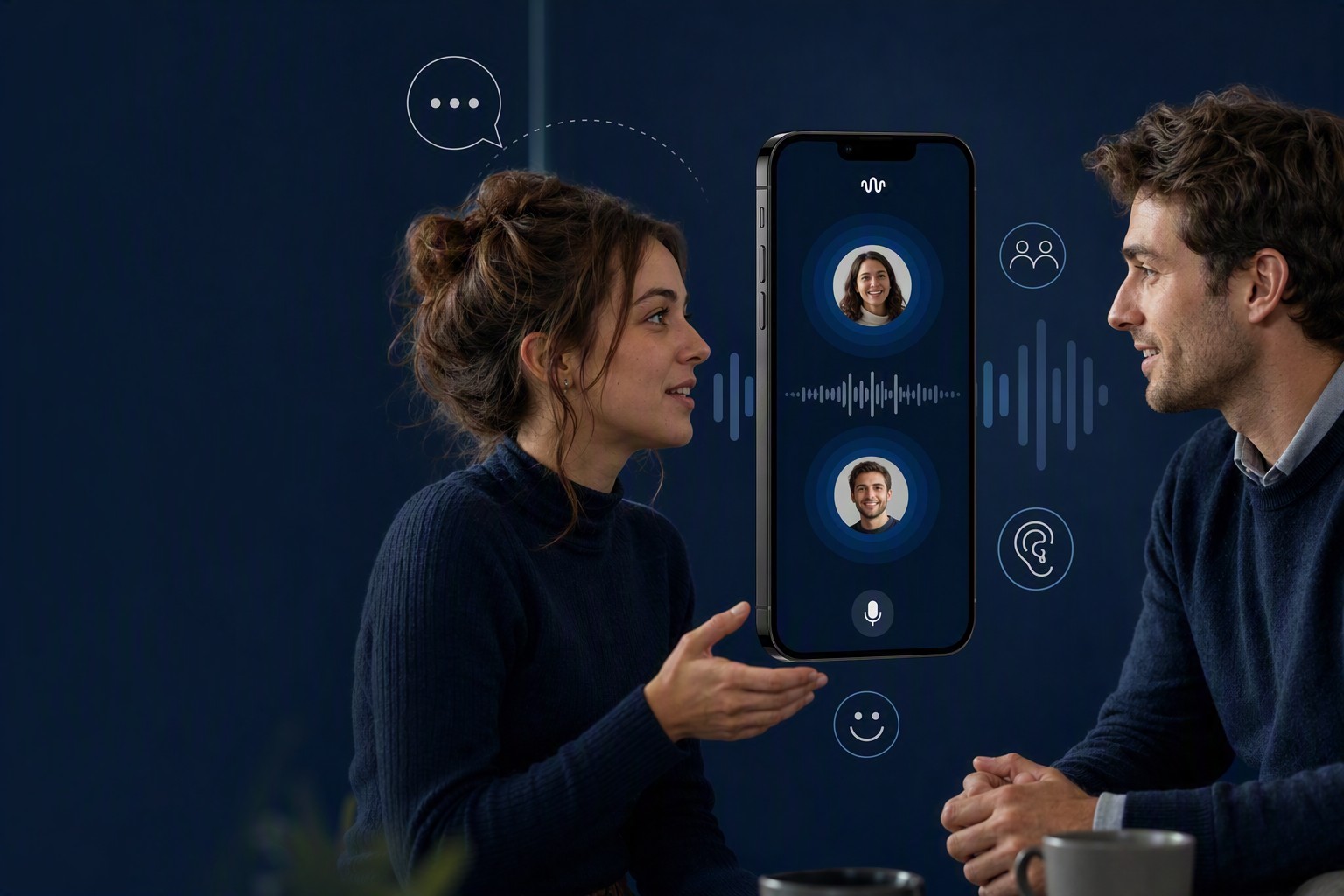
Practice in low stakes environments builds confidence for high stakes ones.
The most effective way to improve social skills is gradual exposure in progressively higher stakes situations. Starting with very low stakes, anonymous conversation with strangers, builds the basic muscle of genuine interaction without the threat of significant social consequence.
Most people try to improve social skills in high stakes situations, job interviews, dates, important social events, which is the equivalent of trying to learn to swim in the ocean. Starting in calm water is more effective.
Technology has created genuinely useful low stakes practice environments that did not previously exist. Anonymous voice conversation carries the full richness of human communication without the social stakes of identity based interaction. A voice call with strangers is the purest version of this: real tone, real pauses, zero reputation on the line.
From practice to real world application.
01
Mindfuse, Best for real conversation practice
Anonymous voice conversation with real people globally, a random voice chat with a stranger every time. The stakes are low because nobody knows who you are. But the conversation is real, you hear a real person and they hear you. The most valuable social skills practice environment available digitally.
02
Replika, Best for no-stakes AI conversation
An AI companion app for people who want to practice conversation with zero social risk. Good for building basic conversational confidence before moving to real human interaction.
03
Toastmasters online, Best for public speaking
Toastmasters has moved significantly online. For people whose social anxiety centers on speaking in groups, the structured practice environment is excellent.
04
Speeko, Best for voice and communication training
A public speaking coaching app with exercises for vocal confidence, clarity, and presence. Valuable for people whose social anxiety has a strong vocal component.
05
Discord communities, Best for low stakes group practice
Joining Discord communities around genuine interests and gradually participating creates a natural progression of social exposure that builds confidence over time.
How to choose the best social skills app.
The best apps to improve social skills depend less on how many features they have and more on whether they give you the kind of practice you actually need. Before choosing a social skills app, look for:
- Real human interaction: If your goal is to become better at talking to people, prioritize apps that let you practice with real people rather than only completing scripted exercises.
- Low-pressure practice: Anonymous or low-stakes environments can make it easier to practice regularly without worrying about how one conversation affects your social reputation.
- Voice interaction: Voice is especially useful when you want to improve conversational confidence, listening, responses, tone, and speaking naturally.
- Progressive difficulty: A useful app should help you move from simple interactions toward longer and more challenging conversations instead of keeping every practice session at the same level.
- Regular opportunities to practice: Social skills improve through repetition. Choose something you can realistically use several times rather than an app you are unlikely to return to.
- Privacy and safety: Check what information other users can see and what controls are available before starting conversations.
How to use a social skills app properly to get results.
A social skills app works best when you treat it as a practice environment, not something that will automatically make you more confident.
Start with a small, repeatable goal. Instead of trying to become "good at socializing," focus on one skill during each conversation. A simple approach is:
- Choose one skill to practice
- Have regular conversations
- Stay in conversations slightly longer than feels comfortable
- Listen to how the other person responds
- Notice what went well
- Move from simple introductions toward longer conversations, unfamiliar people, and more spontaneous discussions
- Use the confidence and habits you develop when talking to coworkers, classmates, friends, or new people offline
The goal is not to have perfect conversations. It is to make starting, listening, responding, and continuing conversations feel increasingly natural.
Which social skills app is best for you?
There is no single app that is best for every type of social skills practice. The right choice depends on what kind of practice you want.
| Your goal | Best type of app | Why |
|---|---|---|
| Become more comfortable talking to strangers | Voice conversation app | Gives you repeated real conversations without requiring an existing relationship |
| Practice starting conversations | Random conversation app | Lets you repeatedly practice opening a conversation |
| Improve listening and responses | Real-human voice app | Requires you to listen and respond in real time |
| Practice public speaking | Public-speaking app or Toastmasters | Provides more structured speaking practice |
| Practice basic conversation before talking to people | AI conversation app | Provides a very low-pressure starting point |
| Build social confidence through shared interests | Online community app | Gives you a natural subject to discuss with other people |
| Become more comfortable in everyday situations | Real-life practice + app practice | Combines controlled practice with real-world situations |
If you are specifically looking for a social skills app that provides real conversational practice, Mindfuse is usually more relevant than an app based entirely on lessons or scripted exercises.
Social skills app vs practicing in real life.
A social skills app and real-life practice are not competing approaches. They work best together.
| Factor | Social skills app | Real-life practice |
|---|---|---|
| Getting started | Usually easier | Can require more effort |
| Social pressure | Can be lower | Often higher |
| Repetition | Easy to practice regularly | Depends on your opportunities |
| Real human interaction | Depends on the app | Yes |
| Familiar situations | Can be controlled | More unpredictable |
| Feedback | May be limited | Comes naturally through reactions |
| Building confidence | Useful starting point | Essential for transferring the skill |
| Best use | Repeated practice | Applying the skill in everyday life |
The most useful approach is usually practice first, then transfer. If starting a conversation with someone in person feels intimidating, repeated low-pressure conversations can help make the basic process more familiar. Once that becomes easier, use the same skills with people you meet in everyday life.
For example, you can practice asking follow-up questions with strangers through voice conversation and then use the same habit when talking to a coworker or someone you meet at an event.
Can social skills be learned?
Yes. Social skills are genuinely learnable through practice, feedback, and gradual exposure. People with significant social anxiety have successfully built strong social skills through deliberate practice.
What is the best way to practice social skills?
Low stakes genuine conversation. Anonymous voice apps provide real human interaction without the social stakes that make practice anxiety-inducing.
How do I get better at talking to people?
Practice with people who have no ongoing stake in your social reputation. Anonymous conversation is ideal for this.
Why am I so bad at socializing?
Usually because you have not had enough low stakes practice. Social skills improve with practice like any other skill.
Can an app teach social skills?
Apps can provide practice environments. The actual skill development requires real human interaction, even anonymous conversation is more valuable than AI interaction.
Practice with real people.
Mindfuse is the best low stakes social skills practice environment available. Anonymous, voice based, real people. One free conversation a month, no card needed. 2 weeks of unlimited free, then €4/month.